Automation & AI agentsSvita — seven personal AI agents
Svita — seven personal AI agents
Seven personal AI agents with a shared memory: each has its own Telegram bot and its own role, but what you tell one, the others know.
What it is
One universal assistant is worse than several narrow ones: it has neither habits nor a specialism, and every conversation with it starts by explaining who you are and what you do. Here there are seven agents with different roles instead, each with its own Telegram bot — its own chat, its own history and its own set of tasks.
The shared memory is what turns seven bots into a retinue. What you say to one, the others know; otherwise the day goes on retelling your own program to yourself. A task can be handed over on the move by voice or a video note, without typing — and that is the difference between a tool that gets used and one that does not.
Specifications: Node.js on a Hetzner server, the Telegram Bot API for everything the owner sees, and models on free tiers. Four more agents are written and switched off by their owner, with the code left in place. The gap is stated plainly: there has been no per-bot check, only a check of the service as a whole.
Nearby work
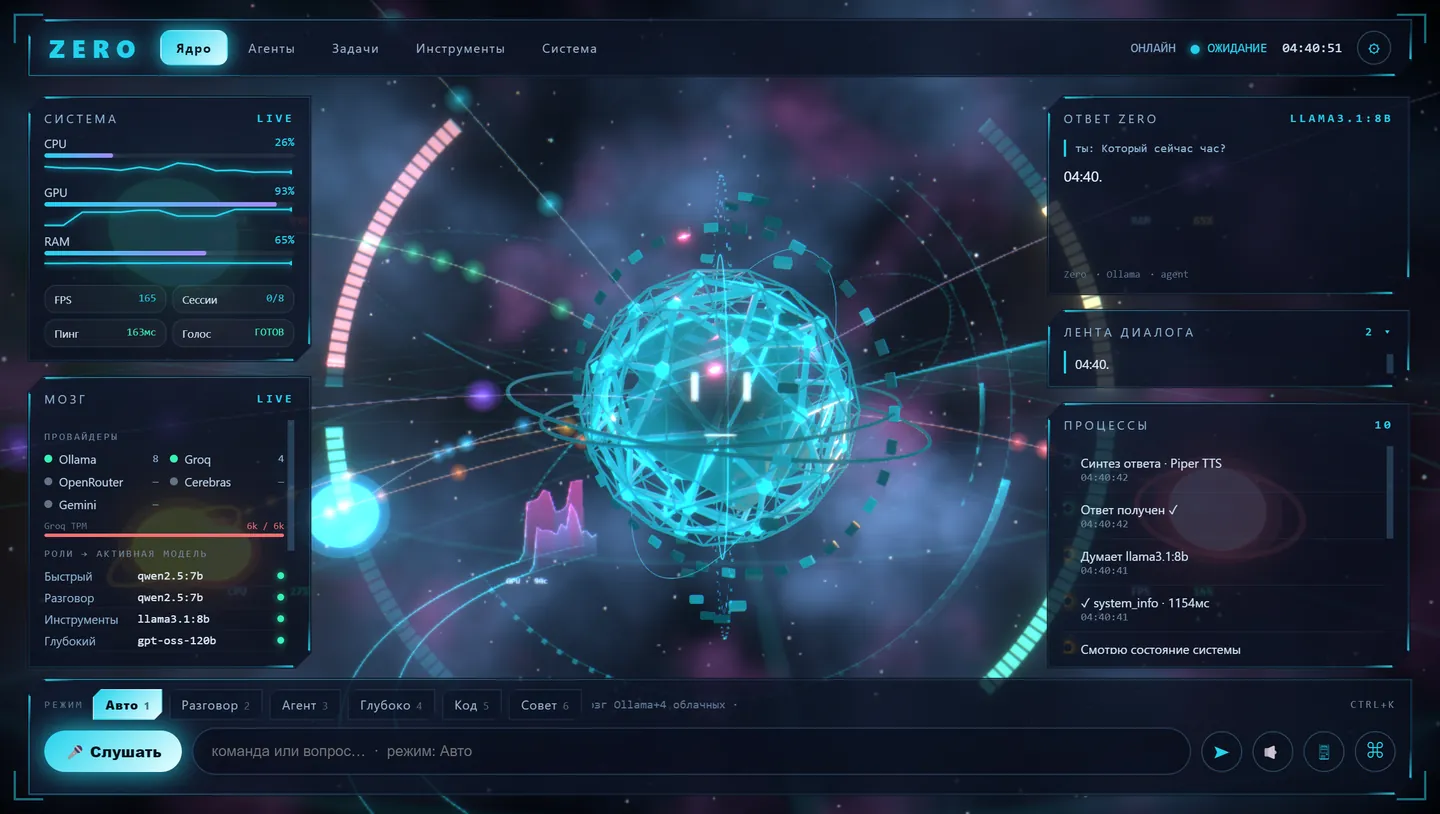 Zero — an offline voice assistantA voice assistant that wakes on its name and thinks on the laptop’s graphics card: no internet, no login, an answer in 0.3–0.6 seconds.My own automation serverMy own server carrying over a hundred automations around the clock: bots, digests, finance, reminders, nightly backups, app synchronisation.Quality Watchdog — a guard that reads the automations themselvesA watchdog that reads how the automations are built rather than the run log, and catches what breaks silently.