ApplicationsI Saw This — searchable memory of your own screen
I Saw This — searchable memory of your own screen
A memory of your own screen: it remembers what was on it and then finds it from a description in words. Everything is read and stored on the laptop itself.
What it is
Half of what a person sees in a working day is saved nowhere: a receipt that flashed by on Tuesday, a name in a closed chat, a number in a window you never saved. You cannot find it afterwards — not by file search and not in browser history, because there is no file and no page. This tool closes that gap: it remembers the screen.
The search works by description: people do not remember how it was written, they remember what they saw. So the text is recognised off the screen and a vision model describes what is happening in words — and the search then runs over those words. It is called up with Ctrl+Alt+V, from any window.
Specifications: Node.js, with text recognition and a vision model, both local. Nothing goes out, and here that is the condition of the thing existing at all, not a nicety: a program that watches somebody’s screen and sends it somewhere is not a tool, it is a disaster. For the same reason there are no screenshots on the showcase: inside is a real desktop.
Nearby work
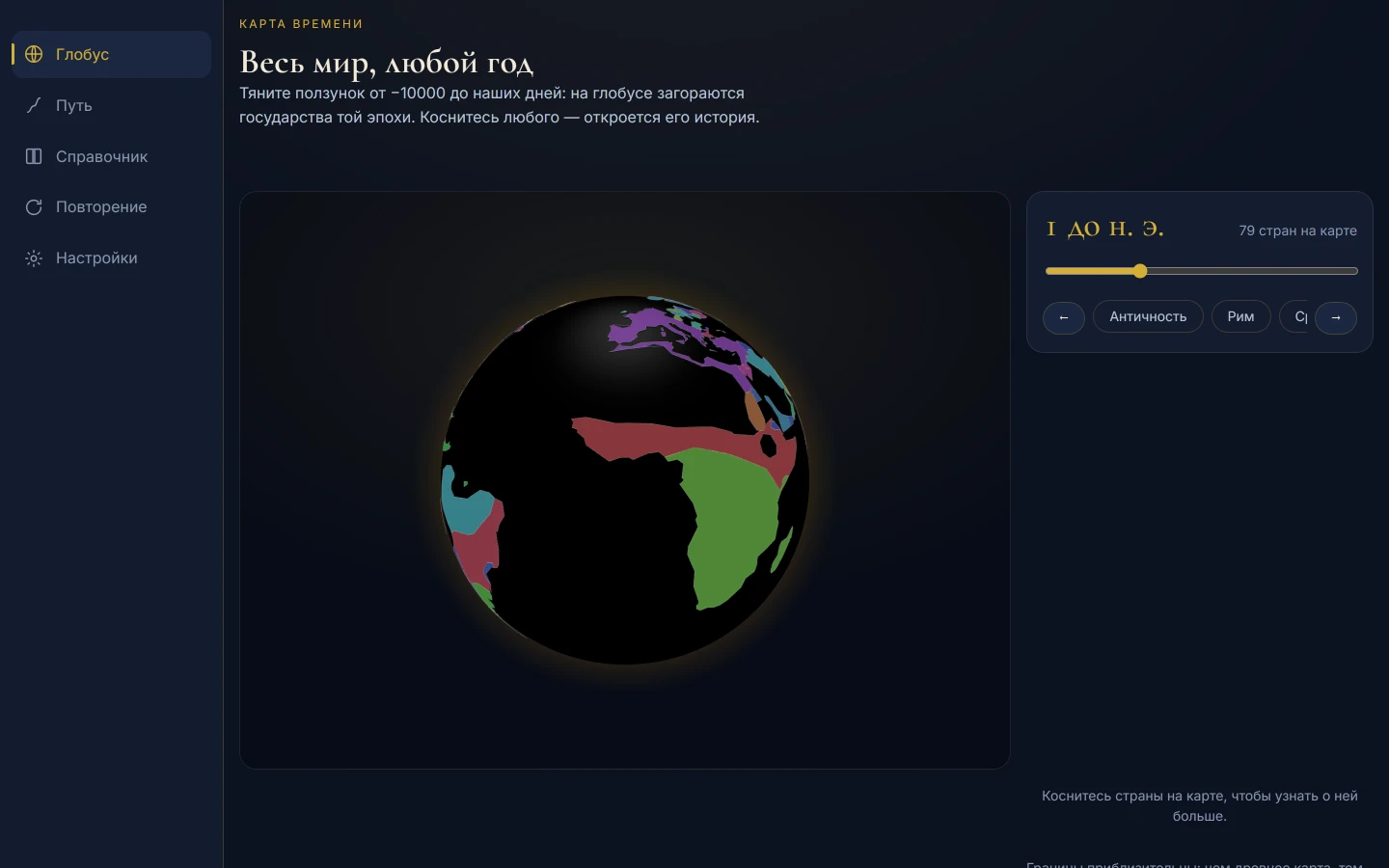 Atlas — the whole history of the world in one appCountries, empires, rulers and family trees from 10000 BC to today: a path through 12 eras, a globe, a game layer and a guide that answers in plain words. Works with no internet.
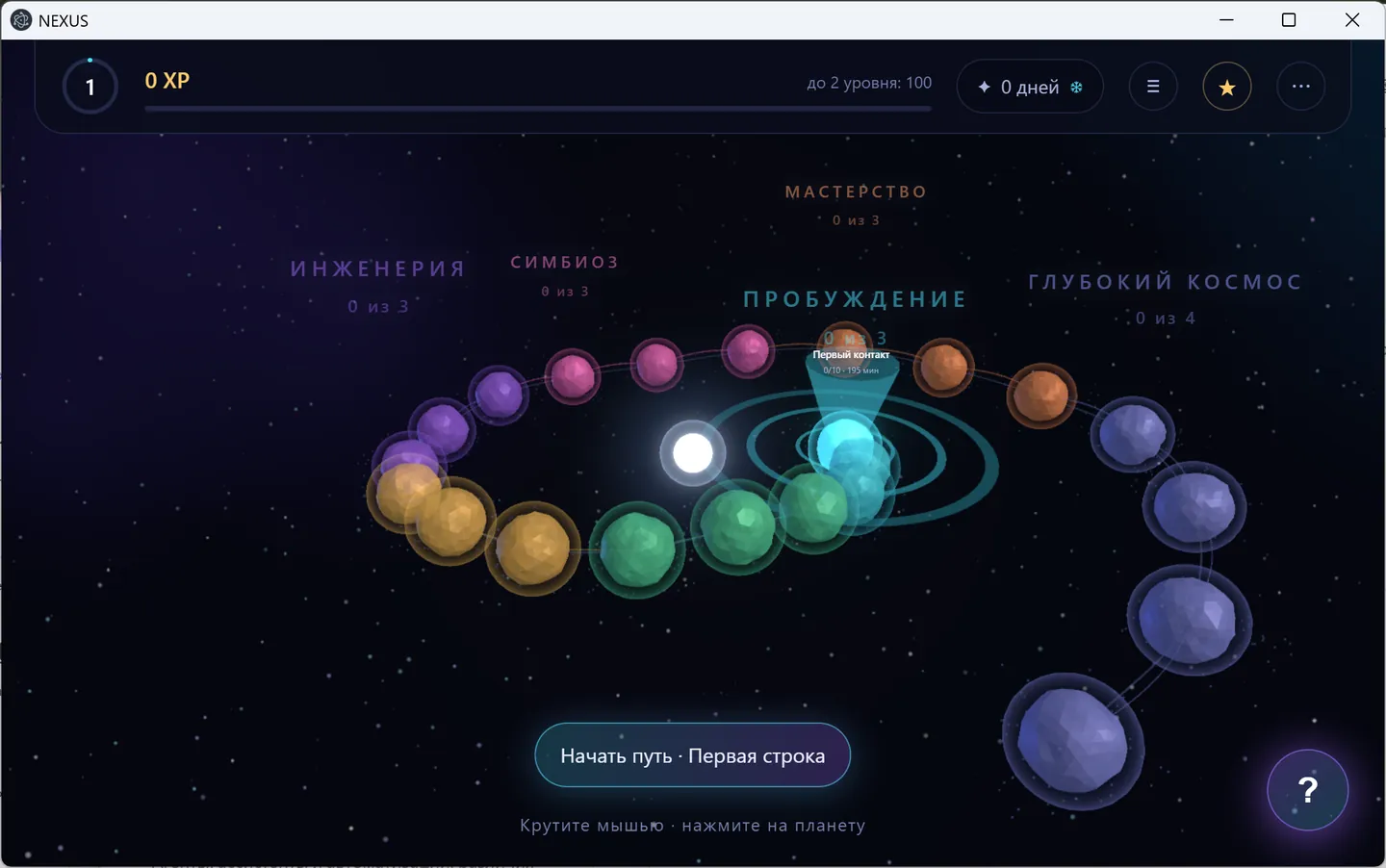 NEXUS — from zero to expert, as a gameA course in coding and working with AI laid out as a galaxy: 22 chapters, 220 lessons, and a sandbox where the code you write actually runs.
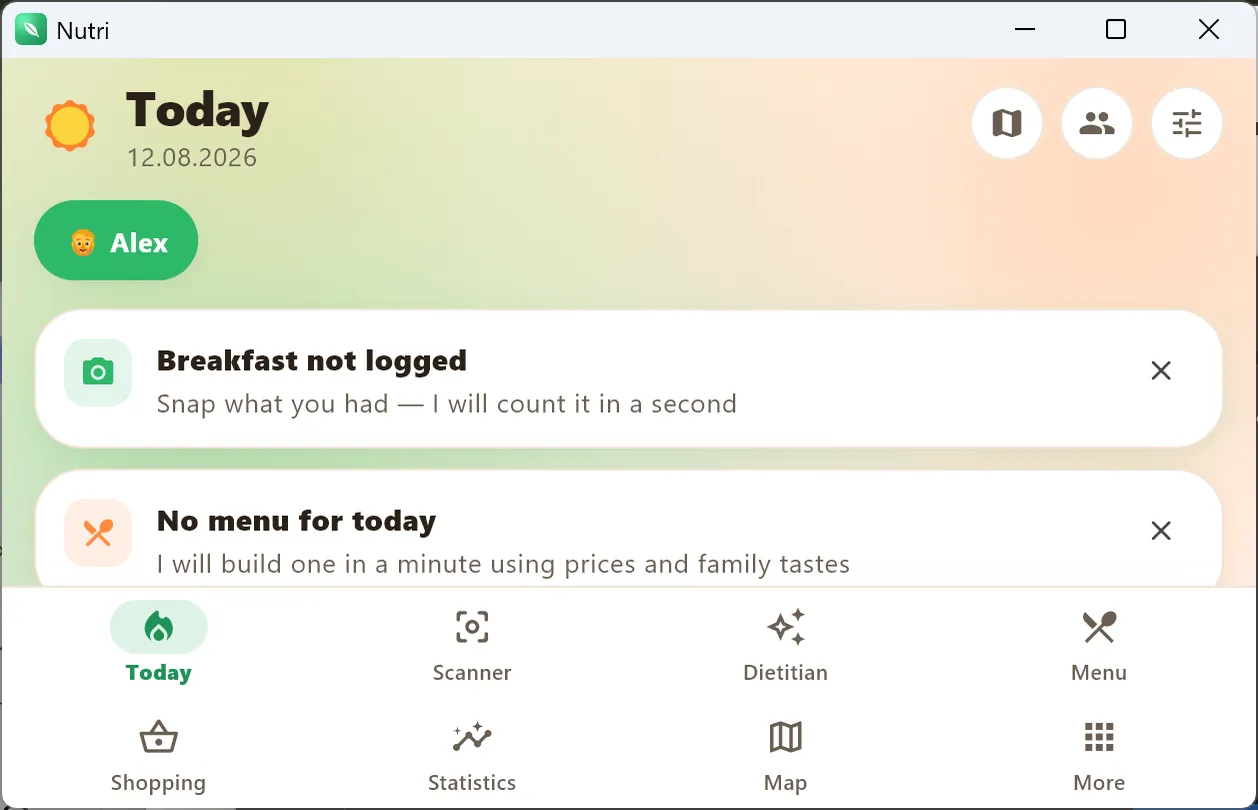 Nutri — eating well as a familyEating well as a family: the camera counts the plate, an AI dietitian remembers each person’s targets, and the menu is built around real supermarket prices.